
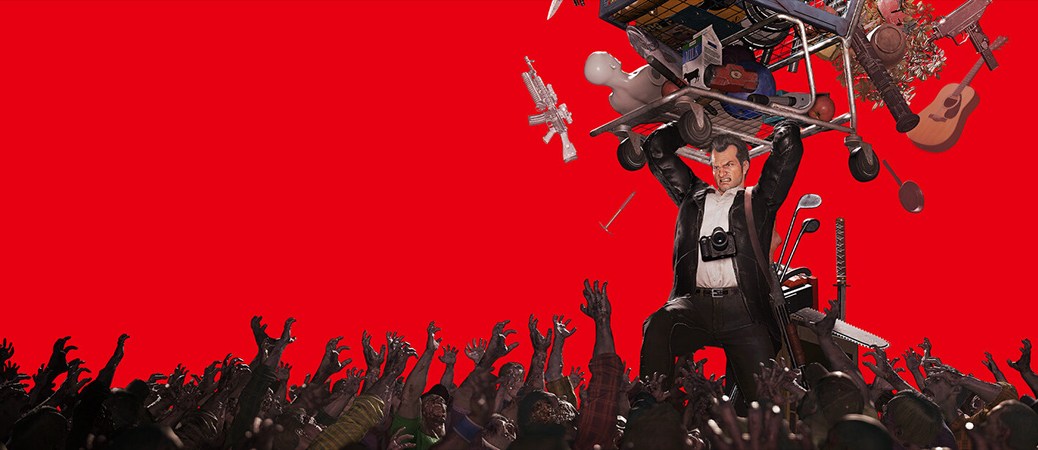
In the wake of rumors of a new DEAD RISING game potentially in the works, and maybe even being revealed this week, I figured I’d share my long-overdue thoughts on last year’s DEAD RISING DELUXE REMASTER. I do have a lot of thoughts about it, and even if this post isn’t exactly riding on the momentum of the game’s release at this point – between the ever-looming threat of ports, remakes, reboots, remasters and prebootquels, as well as potential additional DEAD RISING games, they’re every bit as relevant a year and change later.
To set the stage and provide a bit of context: DEAD RISING is one of my favourite games of all time. I think it’s a timeless masterpiece, an absolute god game that is highly innovative, challenging, and with a ton of room for players to find their own fun. It’s well written, with an intriguing plot, charming characters and plenty of memorable moments, and on top of that the game keeps throwing narrative and mechanical curve balls, really keeping you on your toes throughout. I think the real key to DR’s genius however, is how it’s all built around resource management.

Resource management as a concept is obviously not anything unique to DEAD RISING (or action games in general), but the game does do some unique things, and more than that it pushes the idea of resource management to the forefront by forcing constant decision-making based on how best to spend or reserve resources. I think many parallels can be drawn to RESIDENT EVIL; in that game you are always wrestling with making the best use of limited ammo, herbs, and ink ribbons – but truthfully the most valuable and harshly limited resource is inventory slots. Almost any decision you make will in some way be informed by how it affects or is affected by your inventory: will you have room to collect an important item? Will you risk having to engage with enemies without extra ammo or healing? Will you ‘play it safe’ by stocking up, but force yourself to run through dangerous areas multiple times in the process?
In a similar way, in DEAD RISING your most precious resource is time. Frank West has 72 hours to uncover what’s happening in Willamette, and there are far too many things to find, discover, and deal with to be able to cover every single thing in those three days. Even setting aside the clever GROUNDHOG DAY-esque structure where Frank becomes more powerful alongside the player becoming more knowledgeable through repeated attempts, the strict time limit means that every thing the player chooses to do is also a choice to give something else up. It’s not merely a simple matter of choosing to do sidequest A instead of sidequest B either – much like how RESIDENT EVIL’s inventory management involves weighing combat risks against leaving enough inventory space to make more puzzle progress, in DEAD RISING any choice to mitigate risk by gathering weapons and items, or even making a detour to save your game, means spending your most precious resource and giving yourself less freedom of choice going forward.

Time management permeates DEAD RISING in both obvious and non-obvious ways; the main story missions are all set on a strict clock, and especially without knowledge gathered from repeated (and initially failed) playthroughs, even keeping up with that is a struggle. But even as you start getting a handle on how best to tackle the story missions, and make strategic decisions about which survivors to rescue, which bosses to fight, and which rewards to try and get in between them, the game keeps you on your toes by suddenly and unpredictably throwing even more options into the mix. These events aren’t random, and they can be learnt – routing the game is not difficult per se, it just takes a good couple of attempts – but the way it’s all framed and presented in the game creates great tension where you think you’ve got everything planned out until you suddenly bump into an unannounced boss fight.
The fact that the game has so much stuff going on and so many things to do in the 72 hours means there is never much time to spare, and this is key. Even at max level – where Frank is faster and stronger, but more importantly has lots more inventory space for items and weapons – the game is not a complete walk in the park, and there isn’t much downtime. This means that in the early game – especially if the player isn’t going in with prior knowledge – the amount of stuff to do, and frequently necessary detours to stock up on healing items and the like, is going to be borderline overwhelming.
This friction, the feeling of tension that comes from trying to learn and understand how best to spend your limited time, is the core of what makes DEAD RISING such an amazing game. You are incentivized to explore the mall, try different things, even ignore the story completely if you want to – in the name of learning the game, learning the world, and building mastery that will make you better equipped to make decisions on how to manage your resources in future attempts.
Why Friction Matters
Friction, then, becomes a central part of why I love DEAD RISING – and as you may suspect, have significantly less love for its DELUXE REMASTER. The original DEAD RISING, then and now, is commonly and (mostly rightfully) criticized for a number of issues, perhaps most notably the awful pathfinding AI of the rescued survivors. But many people also had grievances with occasionally clunky controls, limited and manual saving, and the frequent interruptions from Otis being an absolute nuisance to deal with. Many if not all of these things were more or less immediately “addressed” in subsequent DEAD RISING games to make for a more lenient, frustration-free and frictionless experience, to the extreme where DEAD RISING 4 not only completely lacks time mechanics, it just bears no resemblence to its original namesake and is a terrible game all around (thankfully, most people seem to agree on that one, even if everyone’s reasoning doesn’t align with mine). But being the grumpy contrarian that I am, my position is that this friction is good – and by extension, features and mechanics that add to or play into this friction, are good as well.

Yes, Otis is a complete nuisance in the original game. This is not a mistake! Answering Otis’s calls takes time, having to be extra careful because you’re unable to jump, climb, fight or interact with stuff while on the radio with him is intentional, because it creates friction! It’s OK for things in video games to be annoying – in fact it can be a really good thing – if it serves the purpose of strengthening or elevating the central conceit of the game. Forcing the players to make a detour – to spend time – in order to save their game is also clearly a deliberate design choice. RESIDENT EVIL works very similarly (and it works great there too!), the very real risk of “losing progress” by dying and having to try a section of the game one more time is something you simply have to weigh against the reward of resources saved (whether time, inventory or ink ribbons) by choosing not to save your game.
Even the things that almost certainly were not intentional design choices, such as corralling survivors being an occasional headache, still work in the game’s favour, because they too contribute to the central friction. Many arguments have been made about how awkward combat and limited visibility of fixed camera angles work for horror games because they can immerse the player in the conceit of being helpless and in danger, but I think that can be extrapolated to pretty much any kind of game. It doesn’t really matter if it’s a conscious game design choice or not, it doesn’t matter if it’s even strictly something within the game design itself, I think any aspect of the gameplay experience that feeds into and/or contributes to the conceit of the game is generally good.
People probably can and do disagree on what the central conceit of DEAD RISING is – as evidenced by the sequels increasingly undermining the challenge and friction as laid out by the original game’s design. It’s an open question whether to place the blame for this on the creative vision of the sequels’ designers, or the ephemeral ‘wider audience’ who ostensibly don’t want any friction in their games, but either way I find it annoying, since that friction has always been the aspect that sets DEAD RISING apart from other games to me. It’s not about having big hordes of zombies, it’s not about a big world to explore, it’s not about a creepy yet irreverent tone, and it’s not about wacky, over-the-top characters. Those things are all part of DEAD RISING, yes, but to me they mean very little compared to the central conceit of the time mechanic, and how the entirety of the game play experience is built around it.

What’s in a “Deluxe Remaster”?
DEAD RISING DELUXE REMASTER was announced in 2024, promising a return to form by reverentially recreating the original game, but of course with some of the prerequisite “modernizations”. I was wary going in, but still eager to play the game – even if it had been a total mess, I still would’ve found it interesting to experience as a gigantic fan of the original game. While I am happy to report that I do not consider it “a total mess” by any stretch, it was disappointing in the sense that I think almost every meaningful change made to the game undermines the friction of the time mechanics, and as such weakens the game’s design. And even more disappointingly, it does not offer anything substantially new to players who have already completed the original.
DELUXE REMASTER does not make any sweeping changes to the game’s structure or mechanics – it is in fact a very faithful remake in a lot of the areas that truly matter, and it has not been rebalanced in terms of when and how missions are distributed. It’s close enough that Capcom can claim that it’s the same game with some amount of credibility. However there are many changes, some more major than others, most of which contribute to reducing friction in some form or another – so called “quality-of-life improvements”.
Here is a non-exhaustive list of changes made, to give you an idea:
- “Modern” control scheme (optional)
- Voiceover for all in-game/non-cinematic dialogue
- Skippable in-game dialogue
- Time fast-forward ability
- Multiple save slots
- Checkpoints/autosaves
- New books added to the mall
- PP earning increased for faster level ups
- Rebalanced Infinite Mode with added save/suspend feature
- ‘Erotica’ photography genre removed
- Visible durability for weapons/items
- Wardrobe allowing you to equip any clothing item found (also tells you where every clothing item can be found)
- In-game achievement/challenge tracker
A few of these things I didn’t mind at all – the new control scheme for instance works well, aiming ranged weapons with the right stick feels more intuitive and avoiding accidental dodge rolls by double-tapping the stick is a genuine and welcome improvement. But the irony wasn’t lost on me that the single least objectionable change was essentially the only one that you even get the choice of opting out of. And that’s really the largest bone I have to pick with DELUXE REMASTER – I think most if not all of these things would be welcome additions; the original game is tough, and at least one goal with the remaster was surely to provide a less abrasive experience to increase the chances of more people sticking with it. I have no issue with that, I think it’s a noble and sensible goal – but I think it could have been achieved without sacrificing the original game experience in the process, and the fact that they didn’t go that route is a big source of frustration for me.
An ‘easy’ or ‘beginner’ mode utilising these changes could have been a great addition – I’d even be OK with the new balance being the default, and the original game’s balance and limitations being brought back in some alternate ‘original’ or ‘hardcore’ mode. But the game doesn’t do that; the original game experience, with the original difficulty, as originally designed, is simply no longer present in the DELUXE REMASTER. Regardless of how I may have felt about the changes, not having the original version present means by definition that I couldn’t consider the remaster definitive.

“Quality of life” Vs. “compromise”
It should be noted that there are many, many things that very easily could have been altered, softened or made worse in any number of ways, and I don’t think DEAD RISING DELUXE REMASTER is a bad game – it is just a needlessly compromised version of a masterpiece. “It could’ve been worse” isn’t exactly enthusiastic praise, but with a few exceptions I do think they did a fine job with the audiovisual update, and it’s of course still a great game at its core. It maintains enough of what is great about the original to still be a really good game in its own right, and it is worth pointing out that simply by leaning on that 2006 game it is a massive course correction; especially from the abysmal DEAD RISING 4, but even compared with the other sequels in general (which, despite everything, I still like).
I will also gladly admit that I think some of the changes like the new books (making more types of items more viable) and making Infinite Mode a bit less insane are changes for the better – I am admittedly drawing the line in the sand at an arbitrary point, so of course not everyone will agree with what constitutes a compromise and what constitutes and improvement. In the grand scheme of things I don’t think the game’s massively compromised, I just don’t really think there are any meaningful enough upsides to warrant choosing DELUXE REMASTER over the original – and crucially, with the 2006 experience not being intact in the new release, it becomes a case of either or, rather than the remaster making the original redundant or obsolete.
Just to have it addressed, there are some slight changes to things like dialogue and character design that I don’t agree with, but I don’t consider them worth throwing a massive fit over. Similarly, the removal of the ‘Erotica’ photography genre seems to me like kind of a pointless gesture to make the game “less offensive”. While I understand the objection some might have with the game literally giving you points for taking unsolicited “sexy” photographs, I think it’s a somewhat arbitrary line to draw given that you are still rewarded for taking pictures of the same people being savagely torn apart by zombies, or worse. I also think it’s a bit of sanitization that doesn’t quite line up with Frank West as a character – although he might leave Willamette a hero for saving the lives of dozens of people and helping expose a huge conspiracy, he enters the plot essentially a sleazy opportunist, and only gets involved for the chance of a great scoop.

Still, none of these things being changed have anywhere close to the kind of impact that the mechanical changes do. And it’s such a huge missed opportunity that these kinds of changes were made without also giving the player more choice. If there was at least a way to play the game as originally designed, I could far more easily recommend DELUXE REMASTER as the go-to version of DEAD RISING.
Granted, it is of course possible to at least choose not to engage with the autosaving, which I consider to be by far the most egregious undermining of the original game’s tension. As long as you do that, DELUXE REMASTER doesn’t force enough compromise on the player to fully subvert the experience by any stretch. But at that point… why not just play the original? The 2016 port is excellent, and it’s available on PC, Xbox and PlayStation, typically at about 10-30% the price of DELUXE REMASTER.
As it stands, I would really only recommend DRDR over the original to someone who has tried and bounced off the 2006 game, and is confident that the reduced friction and lowered difficulty of the remaster is the only way they’d ever get around to playing DEAD RISING. Sadly, I can’t really see it as a great ‘entry point’ either – a lot of the challenge and friction of DEAD RISING comes from the process of learning the game over repeated play, so going into the original game after having completed DELUXE REMASTER would essentially mean already having had that experience compromised. And, for better or worse, the two games really are similar enough that I don’t know that there’s much to gain from playing both anyway.
I think my biggest disappointment – from a personal standpoint, anyway – is that there simply isn’t much there for someone like me, who’s very familiar with the game and already finished it multiple times. I would not have wanted any major changes to the game’s structure or difficulty, but I think there is tons of room for interesting tweaks and additions specifically targeted at experienced players. Something along the lines of the arrange mode from RESIDENT EVIL DIRECTOR’S CUT where item and character locations have been reshuffled could’ve made for a massively different experience and made the game far more exciting to replay for veterans. If you wanted to go even crazier, you could even have a randomized mode where things get truly unpredictable. Even something as extremely simple as a ‘hard mode’ with more limited resources or tougher enemies could’ve been… well, more than nothing.
The Future
Ultimately, what is the fallout from a release like DEAD RISING DELUXE REMASTER? I can sit here and be as grumpy as I want about the changes made to the game (and I will!), but is the sky falling?
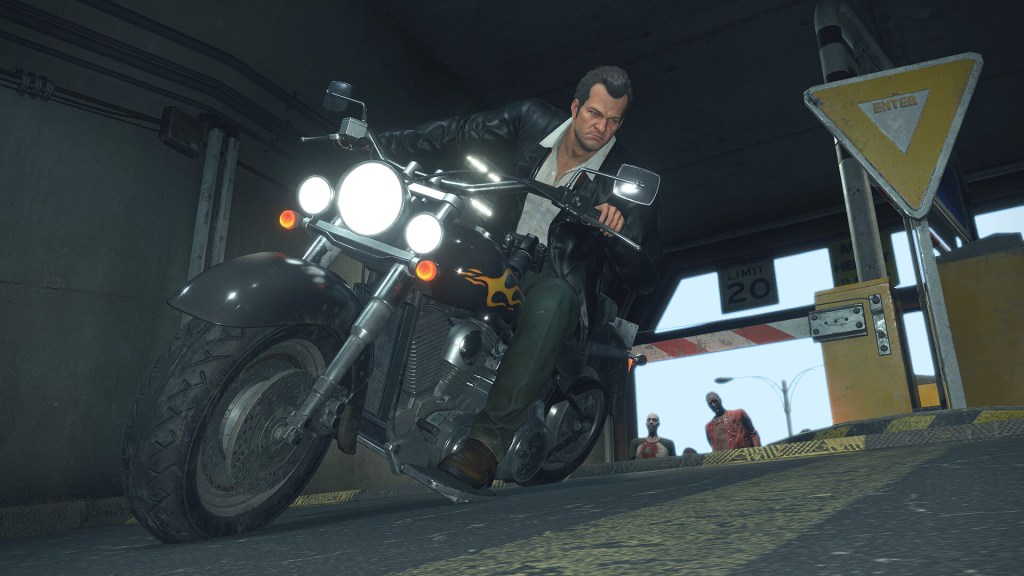
Well, yes and no. Sort of. DRDR is a double-edged sword; I think the kind of changes made to the game are unfortunate, and they do not exist in isolation – as the title of this essay implies, I think the concept of “quality-of-life improvements” is an inherently flawed one, and I think it’s problematic for intentional friction in game design to be conflated with poor UX design. But having said that, DRDR is still the most authentic to the core conceit of DEAD RISING out of all of the games released in the series since the original.
In light of this, amidst rumours of a new DEAD RISING being in the works, I am choosing to be optimistic. Looking at things soberly, it’s hard to picture any series of games where “I think the next one needs to be more like the one from 2006” is a reasonable kind of expectation to have. And certainly given where the series have been previously, DRDR is a lot more closely aligned with what I would want out of a new game. And presumably, DRDR must’ve done decently for Capcom to greenlight and/or at least not cancel a brand new game, so it doesn’t seem crazy to imagine a new game using DRDR as a template of sorts.
One advantage that any new game will have is the inherent novelty of being new. It’s naturally more interesting to experience something for the first time, but I think it also helps divorce itself from certain kinds of expectations. Without a previous experience to directly compare to, I think at least some of the kind of things that greatly annoyed me in DELUXE REMASTER wouldn’t bother me the same way in a completely new game. And if I may indulge in a little extra optimism, maybe a new game means less reluctance to offer more difficulty settings or optional challenge.
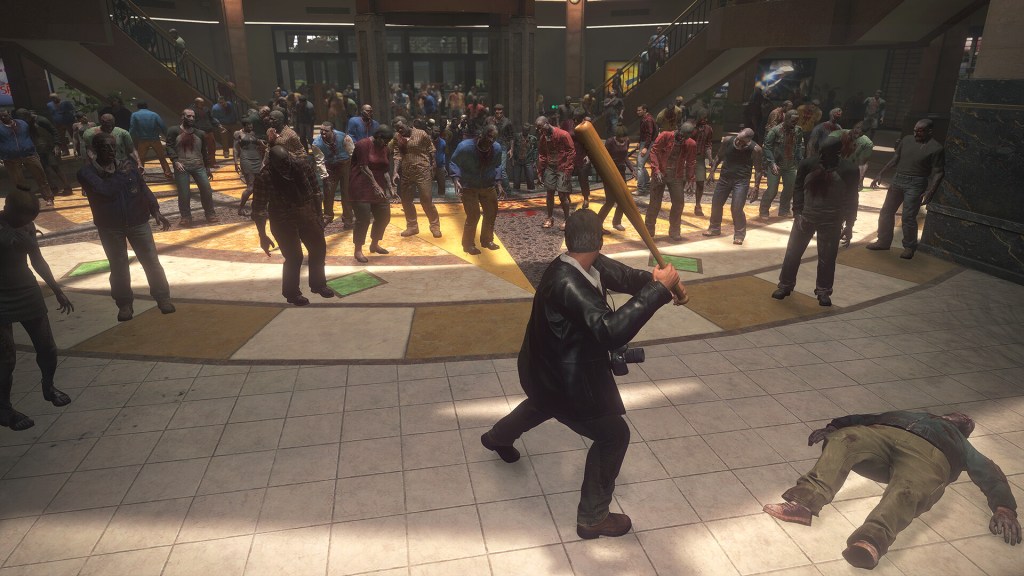
In closing, I think developers, and probably even more so players, need to be mindful of the value of purposeful friction. There’s nothing wrong with a game that offers little resistance, but it’s not a one-size-fits-all kind of situation. Reducing friction and limitations may potentially generate a product that is more palatable to a wider audience, but it is almost by definition achieving that by being more bland. I don’t mind the occasional frictionless, mindless, “keeping my hands occupied while I focus on listening to a podcast” kind of experience – but those games are never the ones that stick with me, and certainly I would never consider it any kind of improvement or evolution over more demanding or challenging types of games.
DEAD RISING offers a unique experience precisely because of the tension generated by its specific set of mechanics, and watering them down to appeal to players who don’t even like them just feels like such a waste to me. There are so many cool game experiences that people are missing out on due to an unwillingness to engage with certain mechanics, systems or limitations – and time limits might even be the #1 thing that people have that kind of instinctual apprehension towards. It’s a shame that a lot of players are seemingly unwilling or unable to appreciate the importance of friction in game design, and even worse is the perception that paving over and smoothing out this friction constitutes a “quality-of-life improvement”.
Naive as it may be, here’s hoping that DEAD RISING 5 may somehow help push general perception somewhat in the right direction.
 Jiggeh's Blog